Anodizing
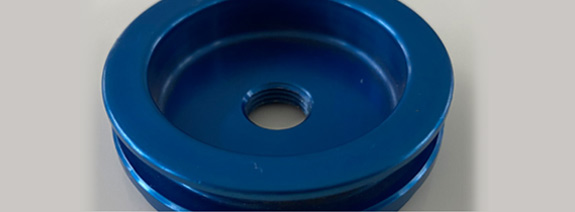
Anodizing is an electrochemical process that converts the metal surface into a decorative, durable, corrosion-resistant, anodic oxide finish. Aluminum is ideally suited for anodizing . Anodizing layer is nonconductive also.
More InfosBlack Oxide

Black oxide or blackening is a conversion coating for ferrous materials, stainless steel, copper and copper based alloys. It is used to add mild corrosion resistance, to enhance appearance and to minimize light reflection. To achieve maximal corrosion resistance, the black oxide must be impregnated with oil or wax. One of its advantages, over other coating processes, is its minimal build-up.
More InfosCadmium
Electroplated cadmium is a robust and versatile metallic coating. Cadmium is a soft white metal that, when plated onto steel, cast iron, malleable iron, copper, and powdered metal, functions as a “sacrificial coating,” corroding before the substrate material. Cadmium plated surfaces resist mold or bacteria growth. The typical thickness of cadmium ranges from .0002to.0008 inches. Typical chromates applied include Clear, Yellow, Olive Drab and Black.
More InfosElectroless Nickel
Electro-less nickel plating is a chemical process that deposits an even layer of nickel phosphorus alloy on the surface of a solid substrate (metal). The process involves dipping the substrate in a water solution containing nickel salt and a phosphorus-containing reducing agent. Electro-less nickel plating is a process that requires depositing a nickel alloy from aqueous solutions onto a substrate without the use of electric current.
More InfosIrridite / Alodine
Irridite is a chemical process that produces a protective chromate conversion film on aluminum and aluminum alloys. The application process is by dip/immersion producing a coating ranging from Clear to Dark Yellow. The process is RoHS (Clear Irridite/Surtech 650). Specifications: MIL-DTL-5541F, PPS 6.2.1, ASTM B449,or as specified by clients with specific requirements. Materials that can be zinc plated : Aluminum and Al alloys.
More InfosPhosphate
¸Labgo Zinc phosphate coating is formed througha process of crystallization on the surface by a chemical reaction. The Zinc phosphate process should be applied by immersion, and it can be used for any phosphate application. Manganese phosphate phosphate is used both for corrosion resistance and lubricity. It is applied by immersion.
More Infos